




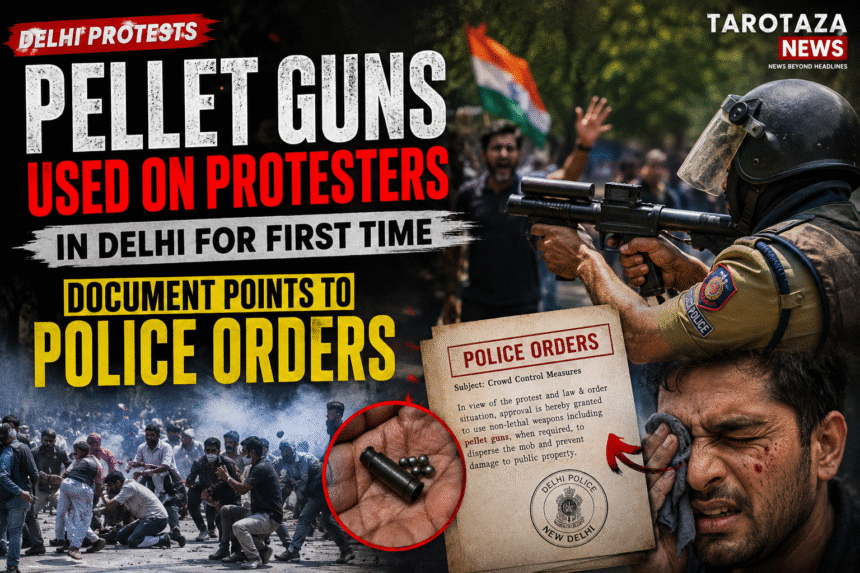
A police diary entry has revealed that Rapid Action Force personnel fired anti-riot gun rounds during the July 20 protest in Delhi on the directions of a Delhi Police officer, raising fresh questions over the use of force against demonstrators. The development is significant because it points to the first known use of pellet-type crowd-control ammunition against unarmed protesters in the national capital.
The diary entry, reviewed in recent reporting, states that RAF personnel deployed at Jantar Mantar used anti-riot guns twice while working with a DCP-rank Delhi Police officer to control the crowd. It also records that 55 non-electric shells, 15 electric shells and five tear smoke grenades were fired during the operation, and says the action was taken on the command of the DCP present.
This disclosure comes days after Delhi Police denied using pellet guns during the protest crackdown. At the same time, inquiry findings and media reports have indicated that at least one RAF personnel was identified for firing seven rounds in Connaught Place, with five of those rounds striking protesters, while a CRPF probe into the incident is underway.
Several protesters reportedly suffered pellet injuries during the July 20 march to Parliament, which was held over the exam paper leak issue. NDTV reported that at least four people were injured, while hospital records cited in multiple reports described pellet wounds, including cases involving serious eye and body injuries.indiatoday.
The incident has also triggered concern within the force. According to reports, RAF Inspector General Seema Dhundhia told personnel that the “excessive use of force” at Jantar Mantar was “unjustified” and directed that projectile action guns, anti-riot guns, electric shock weapons and electric shields would not be used or issued in Delhi until further orders.
Pellet guns and similar anti-riot weapons have long been controversial because they are classified as less-lethal, yet can still cause severe injuries. Recent reports note that their alleged use in Delhi would mark a major escalation in crowd-control tactics in the capital, where such weapons had not previously been known to be used against civilian protesters..
As the CRPF inquiry continues, the focus is now likely to remain on who authorised the firing, whether established crowd-control protocols were followed, and what accountability will follow if violations are confirmed. The emerging paper trail has turned the case from a dispute over protester claims into a serious institutional question involving command responsibility and use of force in Delhi.
Follow us on – Tarotaza News